
Unique Cybersecurity Challenges in SFP Optical Transceiver Networks
Reliable network connectivity has become a foundation for business operations, but increasing data traffic and complex IT environments also create new cybersecurity challenges. As organizations expand their optical communication systems, protecting every component of the network infrastructure becomes essential. We recognize that SFP optical transceiver networks are not only responsible for high-speed data transmission but also play an important role in maintaining secure and stable communication between network devices.
For enterprises, choosing the right optical components requires more than considering transmission speed and compatibility. Security risks, hardware quality, supply chain reliability, and device management capabilities all influence the overall protection level of a network. By understanding these cybersecurity considerations, network professionals can build stronger and more resilient infrastructures.
Understanding Security Risks in SFP Optical Transceiver Networks
An SFP optical transceiver serves as a critical interface between switches, servers, routers, and fiber networks. Although these modules are compact, they directly participate in the transmission of valuable business data. Any vulnerability within the optical communication layer may affect network performance and data security.
One major concern is unauthorized access through compromised hardware components. If network modules come from unreliable sources, they may introduce risks such as counterfeit components, poor manufacturing quality, or hidden vulnerabilities. For this reason, businesses should carefully evaluate suppliers and select manufacturers with strict production controls and testing procedures.
Another security consideration involves compatibility and firmware-related risks. Modern network environments often require optical modules to communicate with advanced switching systems. Poorly designed or unverified modules may cause unexpected network behavior, creating opportunities for security weaknesses or operational disruptions.
Selecting a Reliable SFP Optical Transceiver Supplier
Supply chain security is becoming increasingly important for organizations deploying large-scale network systems. Working with a trusted SFP optical transceiver supplier helps businesses reduce risks associated with unreliable hardware and inconsistent product quality.
A professional manufacturer should provide transparent product information, quality certifications, and strict inspection processes. Manufacturing capability is especially important because direct control over research, development, and production allows suppliers to maintain consistent standards.
When selecting an SFP optical transceiver, businesses should also consider factors such as transmission distance, wavelength compatibility, fiber type, and operating environment. A properly matched module reduces network instability and minimizes potential security issues caused by hardware failures.
For example, industrial-grade testing can help ensure that modules operate reliably under expected conditions. Stable hardware performance supports cybersecurity by reducing unexpected downtime, connection interruptions, and maintenance vulnerabilities.
Strengthening Network Protection Through Hardware Quality
Cybersecurity strategies often focus on software protection, including firewalls, encryption, and monitoring systems. However, physical network components also contribute to overall security. A high-quality SFP optical transceiver supports a stronger foundation by ensuring reliable and predictable communication.
Enterprise networks frequently transmit sensitive information between different locations, data centers, and cloud environments. Any interruption or unauthorized modification within the communication pathway can create serious business consequences. Reliable optical modules help maintain consistent data transmission while supporting the security architecture built around the network.
Businesses should also establish proper inventory management for optical components. Tracking module models, installation locations, and replacement cycles allows IT teams to identify potential risks faster. This approach is particularly valuable for large deployments where hundreds or thousands of optical modules may be installed.
Key Practices for Secure SFP Network Deployment
A secure optical network requires a combination of proper hardware selection and effective management practices. Before deployment, companies should verify that each SFP optical transceiver meets the required technical specifications and network standards.
Regular inspections and monitoring can also improve network security. IT teams should review performance data, detect abnormal behavior, and replace components that show signs of degradation. Preventive maintenance reduces the possibility of unexpected failures that could affect critical business operations.
Additionally, organizations should consider supplier cooperation as part of their cybersecurity planning. Manufacturers with strong technical support capabilities can provide guidance on product selection, compatibility testing, and application requirements. This partnership approach helps businesses maintain secure and efficient network environments over time.
Building More Resilient Optical Networks with Trusted Partners
As digital transformation continues, enterprises need network infrastructure that delivers both performance and security. Optical communication systems must support growing bandwidth requirements while maintaining reliability against evolving challenges. Choosing the appropriate SFP optical transceiver is an important step toward achieving this goal.
At Wintop, we understand that secure networking starts with dependable hardware. We are a trusted network equipment supplier and national high-tech enterprise specializing in the research, development, production, and sales of optical modules and switches. Our SFP optical transceiver lineup includes high-speed transceivers such as 25G, 40G, and 100G solutions, as well as 10G SFP transceivers, 1.25G modules, and 155M modules designed for different distances, wavelengths, and fiber applications.
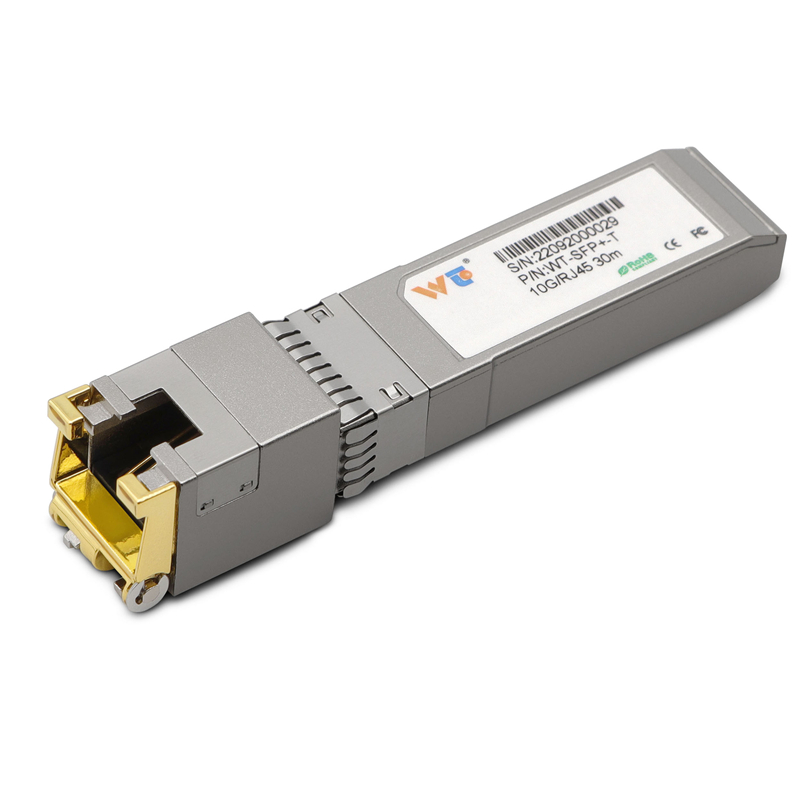
As a direct optical transceiver manufacturer with in-house R&D and factory production capabilities, we perform strict testing on every SFP fiber-optic transceiver before shipment to ensure industrial-grade reliability. Our WT-SFP+-T 10GBase-T SFP+ Transceiver provides 10G copper connectivity through an RJ-45 interface, supports 10GBase-T, 5GBase-T, 2.5GBase-T, and 1000Base-T on the line port, and supports 10GBase-R on the host port. Featuring a hot-pluggable SFP footprint, RoHS compliance, a single +3.3V power supply, and operation from 0°C to +70°C, it offers a practical solution for modern Ethernet deployments.
Contact Wintop today to explore reliable SFP optical transceiver solutions and build a more secure, efficient, and future-ready network infrastructure.