
How Do Gigabit Media Converters Improve Network Distance?
In modern network design, distance limitations are one of the most common challenges we encounter when deploying Ethernet-based systems. Copper cabling such as standard Cat5e or Cat6 is typically limited to about 100 meters, which is not sufficient for many campus, industrial, or multi-building environments. This is where we use gigabit media converters to bridge copper and fiber connections, allowing us to extend network reach while maintaining stable data transmission.
Understanding the Distance Limitation in Gigabit Ethernet
Gigabit Ethernet over twisted pair copper cabling is constrained by signal degradation over distance. Beyond roughly 100 meters, data integrity can decline due to attenuation and electromagnetic interference. This creates bottlenecks when we need to connect distant switches, servers, or remote buildings within the same network infrastructure. As network demand grows, especially for high-bandwidth applications like video monitoring or cloud access, overcoming this limitation becomes essential.
How Gigabit Media Converters Extend Network Reach
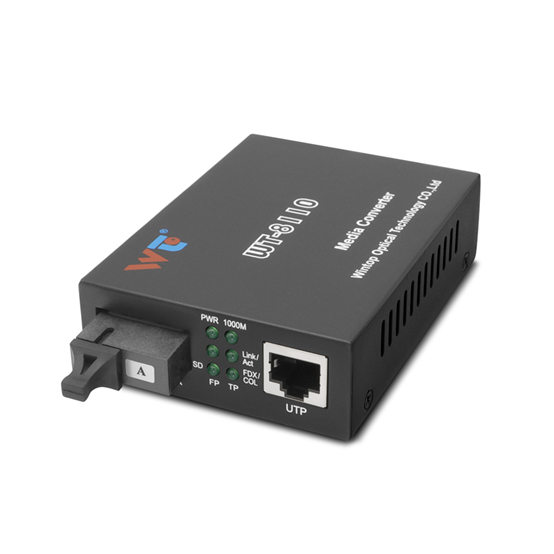
Gigabit media converters function as a physical layer bridge between copper Ethernet and fiber optic cabling. We use them to convert electrical signals from RJ45 copper ports into optical signals transmitted over fiber, and then convert them back at the receiving end. According to technical networking references, this conversion enables copper-based Ethernet networks to extend from 100 meters to tens of kilometers, depending on the fiber type used .
By inserting a fiber segment between two media converters, we effectively bypass the distance restrictions of copper cabling. This allows networks to span long distances without changing the core Ethernet protocol or network architecture.
Fiber Advantages That Enhance Distance Performance
When we switch from copper to fiber through gigabit media converters, several physical advantages come into play:
Fiber optic cables are immune to electromagnetic interference, which helps maintain signal stability in industrial environments. In addition, fiber supports much lower attenuation compared to copper, allowing long-range transmission without significant data loss. Single-mode fiber,in particular,can support distances from several kilometers up to over 100 kilometers depending on the transceiver specifications.
This makes fiber-based links ideal for connecting remote buildings, outdoor installations, and large-scale enterprise networks.
Practical Applications in Real Networks
In our experience, gigabit media converters are commonly deployed in several scenarios. They are used to connect different floors of a building where new fiber is introduced between copper-based switches. They also support industrial environments where equipment must be isolated from electrical noise while maintaining stable communication links.
In campus networks, we often deploy them to connect data centers, administrative buildings, and surveillance systems without requiring full network redesigns. This flexibility allows gradual infrastructure upgrades while preserving existing hardware investments.
Conclusion
Gigabit media converters improve network distance by enabling seamless conversion between copper Ethernet and fiber optic transmission, effectively removing the traditional 100-meter limitation of twisted-pair cabling. By leveraging fiber's long-distance and interference-resistant properties, we can design scalable and reliable networks that support modern bandwidth demands.
At Wintop, we focus on delivering dependable gigabit media converter solutions that help extend network reach with stable performance and practical deployment flexibility. Wintop provides reliable networking components designed to support efficient long-distance connectivity and simplified fiber integration for enterprise and industrial applications.