
Common Misconceptions About RJ45 Copper SFP Transceiver Modules
In network infrastructure planning, we often encounter confusion around the RJ45 copper SFP transceiver module, especially in mixed fiber and copper environments. While this type of module is widely used for short-distance Ethernet connectivity, misunderstandings about its performance, compatibility, and application scope can lead to suboptimal network design. At Wintop, we work closely with network integrators and industrial users to clarify these issues and provide practical deployment guidance.
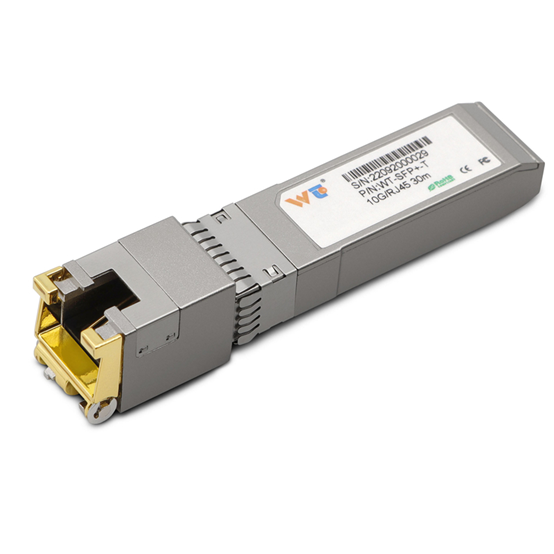
Misconception One: RJ45 Copper SFP Modules Are Slower Than Fiber in All Cases
A common assumption is that RJ45 copper SP transceiver modules always deliver significantly lower performance than fiber modules. In practice, these modules typically support up to 1 Gbps over short distances, which is sufficient for many enterprise switches, industrial control systems, and access-layer connections.
We at Wintop emphasize that performance differences should be evaluated based on application requirements rather than general comparisons. For short-range connections inside racks or between nearby devices, copper SFP modules provide stable and efficient data transmission without unnecessary infrastructure complexity.
Misconception Two: They Are Not Suitable for Industrial Environments
Another misunderstanding is that RJ45 copper SFP transceiver modules are only suitable for office networks. In reality, many industrial systems use them for device-level connectivity where fiber deployment is not necessary or cost-effective.
At Wintop, we design our transceiver-compatible networking solutions to support environments such as manufacturing lines, monitoring systems, and control cabinets. In these scenarios, copper SFP modules offer practical flexibility when connecting PLCs, HMI systems, and edge devices over short distances.
Misconception Three: Compatibility Is Limited
Some users believe that RJ45 copper SFP transceiver modules are highly restricted in compatibility and only work with specific switches. While compatibility does vary depending on hardware and vendor coding, many modern network devices support multi-vendor interoperability.
We at Wintop recommend verifying switch specifications and ensuring proper module matching during deployment. Our experience shows that most integration issues arise from configuration mismatches rather than inherent hardware limitations.
Misconception Four: They Generate Excessive Heat
There is also a perception that RJ45 copper SFP modules produce excessive heat compared to fiber modules. While copper-based transmission does generate more heat due to electrical signaling, properly designed modules operate within safe thermal ranges.
In Wintop solutions, thermal design and power efficiency are carefully considered to maintain stable operation even in high-density switch environments. Proper airflow and rack management further ensure reliable performance.
Practical Applications in Network Design
RJ45 copper SFP transceiver modules are commonly used for switch uplinks, server connections, and temporary network extensions. They are particularly useful in hybrid networks where fiber backbone infrastructure exists,but copper access is still required.
We at Wintop often see these modules deployed in edge computing environments, industrial gateways, and compact networking setups where flexibility and cost control are important factors.
Conclusion
Understanding the real capabilities of the RJ45 copper SFP transceiver module helps avoid design inefficiencies and improves overall network planning. Many misconceptions stem from comparing it directly with fiber without considering the use case context.
At Wintop, we provide reliable transceiver module solutions and support network professionals in selecting the right connectivity options for their systems. Wintop delivers practical, application-focused networking components designed to support stable and efficient infrastructure deployments.