
What Does a Gigabit Ethernet Media Converter Do in an Industrial Network?
In modern industrial environments, reliable and high-speed communication is essential for automation, monitoring, and control systems. A gigabit Ethernet media converter plays a key role in ensuring stable data transmission between different network media types, especially when copper Ethernet and fiber optic cabling need to work together. In this context, we at Wintop focus on delivering industrial-grade networking solutions designed to support demanding operational conditions.
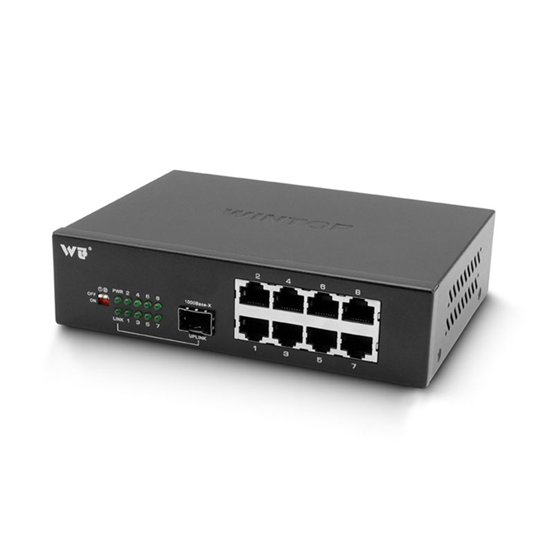
Bridging Copper and Fiber Networks
In many industrial sites, existing infrastructure still relies on copper Ethernet (RJ45), while long-distance or electrically noisy environments require fiber optic cabling. A gigabit Ethernet media converter bridges this gap by converting electrical Ethernet signals into optical signals and vice versa.
This conversion allows devices using standard copper ports, such as PLCs, controllers, and industrial switches, to communicate seamlessly with fiber-based backbone networks. As a result, we can extend network reach well beyond the typical 100-meter limitation of copper cabling without redesigning the entire system.
Enhancing Distance and Stability in Harsh Environments
Industrial environments often include heavy machinery, electromagnetic interference, and temperature fluctuations. Fiber optic transmission is naturally resistant to EMI and signal degradation, making it ideal for these settings.
By using a gigabit Ethernet media converter, we enable stable high-speed transmission over long distances between production areas, control rooms, and remote facilities. This is especially useful in factories, power plants, transportation systems, and outdoor installations where reliability is critical.
Supporting High-Speed Industrial Data Transmission
Gigabit Ethernet (1000 Mbps) ensures that large volumes of data can be transmitted quickly and efficiently. This is important for applications such as the following:
Industrial automation systems that rely on real-time control signals
Video surveillance networks in security monitoring systems
Data acquisition systems in energy and manufacturing environments
We at Wintop design media converters that maintain consistent gigabit-level throughput, helping industrial networks handle increasing data loads without bottlenecks.
Simplifying Network Expansion and Integration
Another important function of a gigabit Ethernet media converter is simplifying network expansion. Instead of replacing entire systems, engineers can integrate fiber links into existing copper-based infrastructure.
This makes it easier to scale operations, connect additional production lines, or link multiple buildings within a facility. The plug-and-play nature of most industrial media converters also reduces configuration complexity, saving time during deployment and maintenance.
Improving Network Reliability and Reducing Downtime
Industrial networks require continuous uptime. Media converters often include features such as link fault detection and status monitoring to help identify connection issues quickly.
By isolating network segments and converting media types efficiently, these devices reduce the risk of system-wide failures. This improves overall network resilience and minimizes downtime in critical operations.
Conclusion
A gigabit Ethernet media converter is a vital component in industrial networking because it bridges copper and fiber networks, extends communication distances, and ensures stable high-speed data transmission in harsh environments. It also simplifies system expansion while improving overall reliability.
At Wintop, we provide industrial-grade gigabit Ethernet media converter solutions designed for consistent performance, rugged environments, and scalable industrial network architecture. Contact us to explore how our products can support your industrial connectivity needs.