
What Is a Fiber Media Converter and How Does It Work?
In modern network infrastructure, fiber media converter manufacturers play an important role in enabling communication between different transmission media. As a company in this field, we at Wintop focus on delivering reliable connectivity solutions that help networks bridge copper and fiber environments efficiently. To understand why this device matters, it is important to first look at what a fiber media converter is and how it functions in real-world applications.
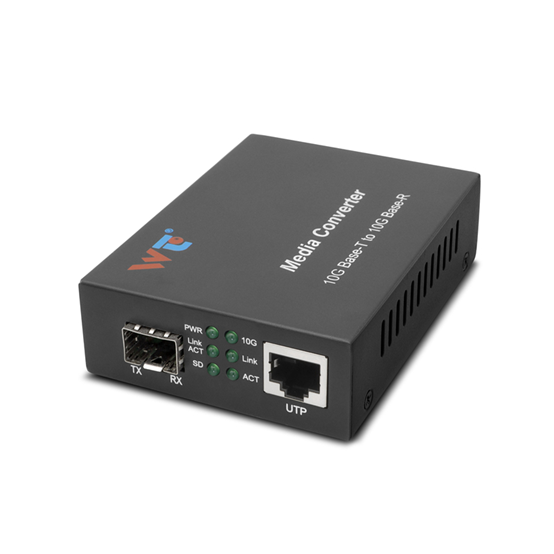
What Is a Fiber Media Converter?
A fiber media converter is a networking device designed to connect two different types of network cabling, typically copper Ethernet (RJ45) and fiber optic cable. It allows devices that normally use electrical signals over copper to communicate through optical signals over fiber.
In simple terms, it acts as a translator between electrical signals and light signals. This makes it possible to extend network distances far beyond the limitations of copper cabling while maintaining stable data transmission across different environments.
How Does a Fiber Media Converter Work?
A fiber media converter operates at the physical layer of a network. Its core function is signal conversion rather than data processing. When data enters the device through a copper Ethernet port, it is converted from electrical signals into optical signals and transmitted through a fiber cable. At the receiving end, another converter or compatible device converts the optical signals back into electrical form.
This process is transparent to higher-level network protocols, meaning switches, routers, and servers do not need to be modified to support fiber connections.
Typically, a fiber media converter includes two key interfaces:
First, an RJ45 port for copper-based Ethernet connections. Second, a fiber optic port that supports single-mode or multi-mode transmission,depending on network requirements. Some models also support advanced features such as different Ethernet speeds, duplex modes, and wavelength variations for specific deployment scenarios.
Why Fiber Media Converters Are Used in Networks
Fiber media converters are widely used when there is a need to extend network distance or integrate legacy copper systems with fiber infrastructure. Copper cables are generally limited to around 100 meters, while fiber optic cables can transmit data over several kilometers without significant signal degradation.
They are commonly deployed in campus networks, industrial environments, and metropolitan area networks where long-distance, low-interference communication is required. Another key advantage is immunity to electromagnetic interference, making fiber-based transmission more stable in electrically noisy environments.
Key Considerations When Selecting a Manufacturer
When choosing fiber media converter manufacturers, several factors are important. Product reliability is essential, especially for industrial or long-distance applications where downtime is costly. Compatibility with different network speeds, such as Fast Ethernet or Gigabit Ethernet, also matters depending on system requirements.
Manufacturing quality, thermal stability, and support for different fiber types are additional considerations. A well-designed converter should ensure stable signal conversion under continuous operation and varying environmental conditions.
Application Scenarios
Fiber media converters are used in a wide range of industries. In enterprise networks, they connect office buildings across campuses. In security systems, they transmit surveillance data over long distances. In industrial automation, they help maintain stable communication between control systems located in separate facilities. They are also widely used in telecommunications infrastructure to extend access networks efficiently.
Conclusion
A fiber media converter is a simple yet essential device that enables seamless communication between copper and fiber optic networks. Converting electrical signals into optical signals and back again, it allows organizations to extend network distance, improve stability, and integrate different types of infrastructure without major system changes.
At Wintop, we specialize in designing and manufacturing high-performance solutions as one of the trusted fiber media converter manufacturers. Our products are built to support stable transmission, flexible deployment, and long-term reliability. Contact Wintop to learn more about how our fiber connectivity solutions can support your network needs.