
What Are Optical Transceivers? A Complete Guide to Types and Specifications
Optical transceivers are essential components in modern fiber optic communication systems. They are used to transmit and receive data over optical fiber networks by converting electrical signals into optical signals and then back into electrical signals. As data demand continues to grow across data centers, enterprise networks, and telecom infrastructure, understanding optical transceivers has become increasingly important for system design and network performance planning. In this guide, we explain what optical transceivers are, their main types, and key specifications that users should consider when selecting the right module.
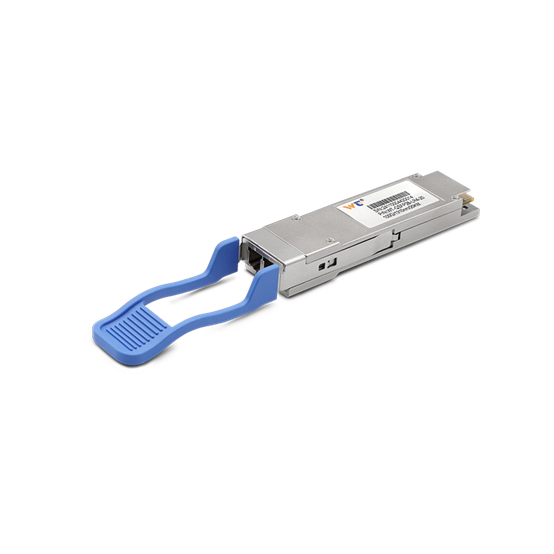
How Optical Transceivers Work
An optical transceiver integrates both a transmitter and a receiver into a single module. The transmitter side uses a laser diode to convert electrical signals into light signals, while the receiver side uses a photodetector to convert incoming light back into electrical signals. This bidirectional function allows efficient high-speed data transmission over long distances with minimal signal loss.
The performance of optical transceivers is closely related to the quality of components, wavelength stability, and compatibility with networking equipment such as switches and routers.
Main Types of Optical Transceivers
There are several types of optical transceivers designed for different networking environments and transmission distances.
Short-range transceivers are typically used within data centers for connections over a few meters to a few hundred meters. These are often cost-effective and support high-speed transmission over multimode fiber.
Long-range transceivers are designed for telecommunication and metropolitan area networks. They can transmit data over several kilometers using single-mode fiber, making them suitable for backbone infrastructure.
There are also different form factors such as SFP, SFP+, QSFP, and QSFP28. Each form factor supports different data rates and port densities, allowing network engineers to scale systems based on bandwidth requirements.
Key Specifications to Consider
When selecting optical transceivers, several technical specifications must be evaluated carefully.
Data rate is one of the most important factors, commonly ranging from 1G to 100G or higher,depending on the application. Wavelength is another critical parameter, typically measured in nanometers, which determines transmission characteristics and fiber compatibility.
Transmission distance should also be considered, as different modules support varying ranges based on optical power and fiber type. In addition, compatibility with networking equipment is essential to ensure stable performance and avoid interoperability issues.
Power consumption and operating temperature range are also important in large-scale deployments, especially in data centers where energy efficiency and thermal management are priorities.
Applications in Modern Networks
Optical transceivers are widely used in data centers, cloud computing environments, enterprise networks, and telecommunications systems. They support high-speed interconnections between servers, storage systems, and network switches, enabling efficient data flow and low-latency communication.
As digital transformation accelerates, demand for higher bandwidth and more reliable connectivity continues to grow, making optical transceivers a foundational technology in network infrastructure.
Conclusion
Optical transceivers play a critical role in enabling high-speed optical communication across a wide range of industries. Understanding their working principles, types, and key specifications helps users make more informed decisions when designing or upgrading network systems.
We at Wintop focus on providing reliable optical communication solutions designed to meet diverse networking needs. Our products are developed with attention to performance stability, compatibility, and practical deployment requirements. Explore our optical transceivers and discover how Wintop can support your network infrastructure with efficient and dependable connectivity solutions.