
What Are the Core Technical Features of 10G SFP+ Transceiver Modules?
In modern high-speed networking environments, the 10G SFP+ transceiver module is widely used to support stable 10 Gigabit Ethernet connections between switches, servers, and storage systems. When we design or deploy network infrastructure, we rely on these modules to ensure efficient data transmission, strong compatibility, and scalable performance. Understanding their core technical features helps us make practical decisions for real network requirements.
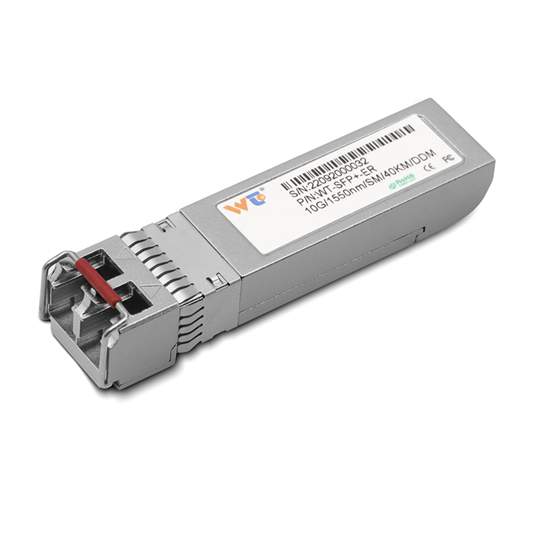
Standardized High-Speed Data Transmission
A key feature of the 10G SFP+ transceiver module is its support for a standardized data rate of 10.3125 Gbps, which aligns with IEEE 802.3ae 10G Ethernet requirements. This standardization ensures consistent communication performance across different vendors and devices. At Wintop, we follow strict SFP+ MSA compliance so that our modules can operate smoothly in a wide range of networking equipment without requiring additional configuration or complex integration steps.
Compact Hot-Pluggable Design
Another important technical characteristic is the hot-pluggable SFP+ form factor. This design allows modules to be installed or replaced while the system is still running, which reduces downtime and improves maintenance efficiency. In environments such as data centers where continuous operation is essential, this flexibility is particularly valuable. The compact size also enables high port density, allowing more connections within a limited switch space and improving overall system scalability.
Transmission Media Options for Different Scenarios
10G SFP+ transceiver modules are designed to support different transmission media depending on application needs. Short-range multimode fiber modules are typically used for connections within data centers and can cover distances up to a few hundred meters depending on fiber quality. Long-range single-mode fiber modules are used for extended transmission distances that can reach several kilometers, making them suitable for campus or metropolitan networks. Copper direct attach cable versions are often used for short-distance interconnects between devices within the same rack, offering a cost-efficient and low-latency solution. These options allow us to select the most appropriate configuration based on distance, budget, and performance requirements.
Low Power Consumption and Stable Operation
Power efficiency is another key consideration in 10G SFP+ module design. Most modules operate at low power levels, typically around 1W to 1.5W, which helps reduce overall energy consumption in dense networking environments. This efficiency also contributes to thermal stability, ensuring consistent performance even when multiple modules are deployed in a single system. Stable heat management is essential for maintaining long-term reliability in continuous operation scenarios.
Built in Digital Diagnostics Monitoring
Many modern 10G SFP+ transceiver modules include digital diagnostics monitoring functionality. This feature enables real-time tracking of key operating parameters such as optical power levels, module temperature, supply voltage, and laser bias current. With this information, network administrators can identify potential performance issues early and carry out preventive maintenance before failures occur. This improves system reliability and reduces unexpected downtime.
Conclusion
The core technical features of the 10G SFP+ transceiver module include standardized high-speed transmission, a compact hot-pluggable design, flexible media options, efficient power usage, and integrated diagnostic monitoring. These characteristics make it an essential component in modern networking infrastructure.
At Wintop, we focus on providing reliable and standards-compliant 10G SFP+ transceiver modules designed for stable performance and broad compatibility. We support customers in building efficient and scalable optical networks, and we invite you to explore Wintop solutions for your next network deployment.