
How 10G Transceivers Are Used in Optical Network Systems
As network traffic continues to grow, organizations require faster and more reliable data transmission technologies to support cloud services, data centers, enterprise networks, and telecommunications infrastructure. A 10G transceiver plays an important role in optical network systems by enabling high-speed data communication over fiber optic cables. Understanding how these modules are used can help network administrators and system integrators select the right solution for their applications.
What Is a 10G Transceiver
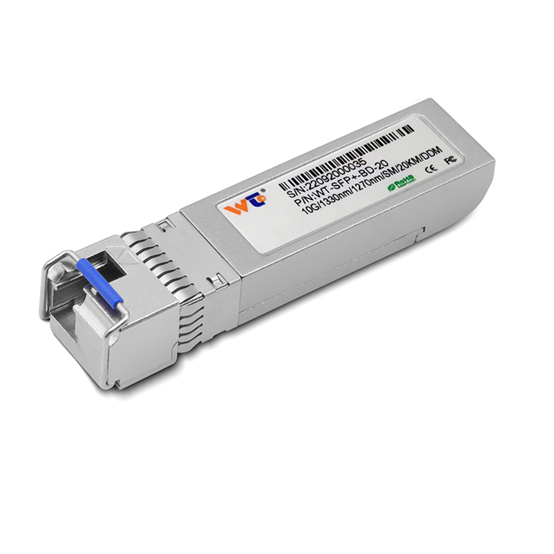
A 10G transceiver is a compact optical module designed to transmit and receive data at speeds of up to 10 Gigabits per second. These modules convert electrical signals from network equipment into optical signals for transmission through fiber optics and then convert incoming optical signals back into electrical signals. Common form factors include SFP+ transceivers, which are widely used due to their compact size and compatibility with various networking devices.
Key Applications in Optical Network Systems
Data Center Interconnection: Modern data centers rely on 10G transceivers to connect servers, switches, and storage systems. High bandwidth and low latency communication are essential for handling large volumes of data and supporting virtualization, cloud computing, and backup operations. Depending on transmission requirements, network operators can choose short-range multimode modules or long-range single-mode modules.
Enterprise Network Infrastructure: Many enterprise networks use 10G transceivers to upgrade backbone connections between buildings, departments, and network cabinets. Compared with traditional copper connections, fiber optic links offer greater transmission distances and stronger resistance to electromagnetic interference, helping maintain stable network performance.
Telecommunications and Service Provider Networks: Telecommunication operators deploy 10G transceivers in metro networks, access networks, and transport systems. These modules support high-speed data transmission across long distances and can be integrated into Ethernet, passive optical network, and other optical communication architectures.
Choosing the Right 10G Transceiver
Selecting an appropriate 10G transceiver depends on several factors. Transmission distance is one of the most important considerations. For example, 10G SR modules are commonly used for short-range multimode fiber links up to 300 meters, while LR modules support single-mode fiber transmission up to 10 kilometers. For longer network spans, ER and ZR modules can support distances of 40 kilometers and 80 kilometers, respectively.
Network compatibility is another critical factor. Administrators should verify that the transceiver supports the target switch, router, or server platform and complies with industry standards to ensure reliable operation.
Why Quality Matters
A high-quality 10G transceiver contributes to stable network performance, lower power consumption, and easier maintenance. Features such as digital diagnostics monitoring, compliance with industry standards, and rigorous testing help improve operational reliability and simplify troubleshooting.
Conclusion
10G transceivers are essential components in optical network systems, supporting high-speed communication across data centers, enterprise networks, and telecommunications infrastructure. By selecting the appropriate module for transmission distance, fiber type, and network environment, organizations can build efficient and scalable optical networks that meet growing bandwidth demands.
Wintop specializes in optical communication products, offering a wide range of 10G transceiver solutions, including SR, LR, ER, ZR, and BiDi modules designed for diverse networking applications. We focus on product compatibility, quality control, and technical support to help customers deploy reliable optical network systems. Contact Wintop today to find the right 10G transceiver for your project.