
Electrical and Optical Signal Conversion in 10G SFP Transceivers
As network speeds continue to increase, the role of the 10G SFP transceiver has become increasingly important in data centers, enterprise networks, and telecommunications systems. One of the core functions of a 10G SFP transceiver is the conversion between electrical and optical signals, allowing high-speed data to travel efficiently across fiber optic infrastructure. Understanding how this process works helps network engineers and IT professionals select the right transceiver for their applications.
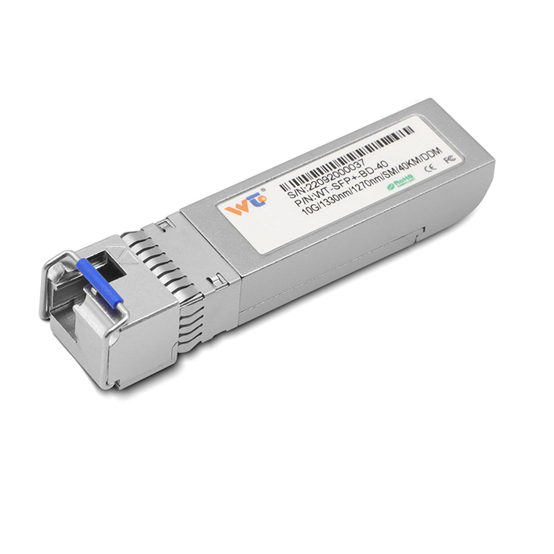
Understanding Electrical and Optical Signal Conversion
A 10G SFP transceiver acts as a bridge between networking equipment and fiber optic cabling. Network switches, routers, and servers generate data in the form of electrical signals. However, fiber optic cables transmit information using light signals. The transceiver performs the critical task of converting electrical signals into optical signals for transmission and then converting incoming optical signals back into electrical signals for processing.
This conversion process enables long-distance communication while maintaining high bandwidth and low signal loss. Depending on the application, different optical wavelengths and transmission distances may be used to meet specific networking requirements.
Key Components Inside a 10G SFP Transceiver
Several internal components work together to achieve reliable signal conversion.
The transmitter section receives electrical data from the host device and uses a laser source to generate corresponding optical signals. Common laser technologies include VCSEL lasers for short-range applications and EML lasers for longer transmission distances.
The receiver section performs the reverse process. A photodetector captures incoming light signals and converts them into electrical signals that can be interpreted by networking equipment. This precise conversion ensures data integrity even at speeds exceeding 10 Gbps.
Additional circuitry such as amplifiers, signal conditioning modules, and digital diagnostics monitoring functions help maintain stable performance and monitor operating conditions.
Factors Affecting Conversion Performance
When selecting a 10G SFP transceiver, users often focus on factors that directly influence signal quality.
Transmission distance is a primary consideration. Short-range modules typically use 850 nm wavelengths and multimode fiber, while long-range modules operate at 1310 nm or 1550 nm over single-mode fiber.
Power consumption and heat generation also impact reliability. Efficient signal conversion minimizes power usage while maintaining stable operation in demanding network environments.
Compatibility is another important factor. Modern 10G SFP transceivers are designed to support a wide range of networking platforms and industry standards, helping simplify deployment and maintenance.
Why Reliable Signal Conversion Matters
Accurate electrical and optical signal conversion directly affects network performance. Poor conversion quality can lead to signal degradation, packet loss, and reduced transmission efficiency. A high-quality 10G SFP transceiver helps maintain stable communication, supports higher network availability, and contributes to long-term infrastructure reliability.
As organizations continue to expand bandwidth capacity, choosing transceivers with dependable optical and electrical conversion capabilities remains essential for supporting growing data demands.
Conclusion
The ability to convert electrical signals into optical signals and back again is the foundation of every 10G SFP transceiver. By understanding the technologies and components involved, network professionals can make more informed decisions when selecting transceivers for specific applications. Reliable signal conversion supports stable data transmission, efficient network operation, and scalable infrastructure growth.
Wintop provides a comprehensive range of 10G SFP transceiver solutions designed for various transmission distances and networking environments. We focus on compatibility, performance, and product quality to help customers build dependable optical networks. Contact Wintop today to find the right 10G SFP transceiver for your project.