
What Is the Role of 1G Media Converters in Hybrid Networks?
As modern networks continue to evolve, many organizations operate hybrid environments that combine traditional copper Ethernet infrastructure with fiber optic technology. While this approach offers flexibility and cost efficiency, it also creates challenges when connecting devices that use different transmission media. This is where a 1G media converter becomes an important networking component.
A 1G media converter enables seamless communication between copper and fiber networks, helping businesses extend connectivity, improve transmission distances, and maximize the value of existing infrastructure. Understanding its role in hybrid networks can help organizations make informed decisions when planning network expansions and upgrades.
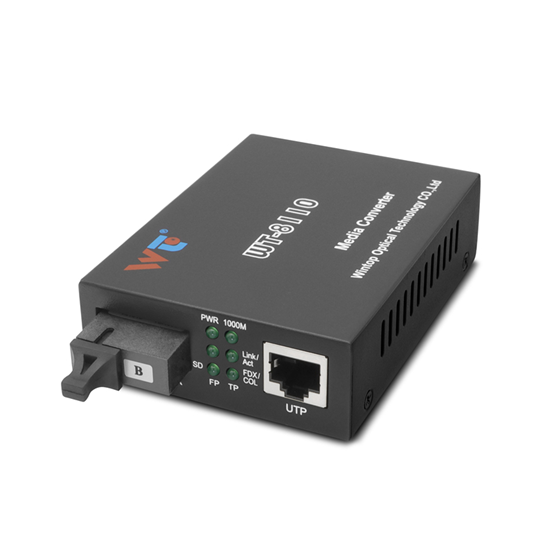
Bridging Copper and Fiber Networks
One of the primary functions of a 1G media converter is to connect Ethernet devices that use copper cabling with fiber optic networks. Many businesses still rely on copper-based switches, routers, and end devices, while newer network segments often utilize fiber for higher reliability and longer transmission distances.
By converting electrical Ethernet signals into optical signals and vice versa, a 1G media converter allows these different network technologies to work together without requiring extensive equipment replacement. This simplifies integration and reduces deployment costs.
Extending Network Reach
Distance limitations are a common concern in network design. Standard Ethernet cables generally support transmission distances of up to 100 meters. In large facilities, office campuses, industrial environments, and surveillance systems, this restriction can make network expansion difficult.
A 1G media converter helps overcome this challenge by enabling data transmission over fiber-optic cabling. Depending on the fiber type and network configuration, communication distances can be extended from several kilometers to much greater ranges while maintaining Gigabit Ethernet performance. This makes hybrid networks more practical for geographically dispersed locations.
Supporting Reliable Data Transmission
Network reliability is a critical requirement for modern business operations. Fiber optic connections are less susceptible to electromagnetic interference than copper cables, making them suitable for environments with heavy machinery, electrical equipment, or complex industrial systems.
When integrated into a hybrid network, a 1G media converter helps maintain stable communication between different network segments. This contributes to consistent data transmission and supports applications that require dependable connectivity, including IP surveillance, industrial automation, and enterprise networking.
Enhancing Network Flexibility
Organizations often seek solutions that support future growth while protecting existing investments. A 1G media converter offers flexibility by allowing gradual network upgrades rather than complete infrastructure replacement.
Businesses can continue using current Ethernet equipment while introducing fiber connectivity where longer distances or improved performance are needed. This approach simplifies network modernization and provides a scalable foundation for future expansion.
Conclusion
The role of a 1G media converter in hybrid networks extends beyond simple signal conversion. It serves as a practical bridge between copper and fiber infrastructures, supports longer transmission distances, improves reliability, and enables cost-effective network expansion. As organizations continue to balance legacy systems with modern networking technologies, media converters remain a valuable tool for maintaining efficient and flexible connectivity.
At Wintop, we provide high-quality 1G media converter solutions designed for stable performance, broad compatibility, and reliable fiber integration. Contact Wintop today to explore networking solutions that help you build efficient and scalable hybrid networks.