
How Do Gigabit Ethernet Media Converters Extend Network Distance?
One of the most common challenges in network deployment is the distance limitation of traditional Ethernet cabling. Standard copper Ethernet cables typically support transmission distances of up to 100 meters. Beyond this range, signal quality can degrade, resulting in reduced performance and potential data loss. For businesses, industrial facilities, campuses, and surveillance systems, this limitation can create obstacles when connecting devices across larger areas.
A gigabit Ethernet media converter addresses this issue by converting electrical Ethernet signals into optical signals that can travel through fiber optic cables over much longer distances. This allows organizations to expand their networks without sacrificing speed or reliability. Fiber-based transmission can extend network links from several kilometers to well over 100 kilometers, depending on the fiber type and module configuration.
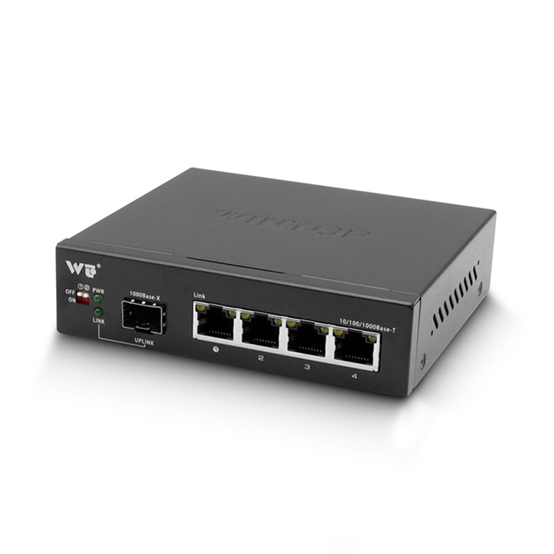
How a Gigabit Ethernet Media Converter Works
A gigabit Ethernet media converter serves as a bridge between copper and fiber networks. It typically includes an RJ45 Ethernet port and a fiber optic port. When data enters through the Ethernet interface, the converter transforms the electrical signal into an optical signal for transmission through fiber. At the receiving end, another converter changes the optical signal back into an Ethernet signal.
This conversion process enables network administrators to connect existing Ethernet devices to fiber infrastructure without replacing switches, routers, or other network equipment. Many gigabit Ethernet media converters support 10/100/1000Mbps auto negotiation and comply with Gigabit Ethernet standards, ensuring compatibility with a wide range of networking environments.
Why Fiber Optics Enable Longer Transmission Distances
Fiber optic cables offer several advantages over copper cabling when long-distance communication is required.
First, optical signals experience significantly lower attenuation than electrical signals, allowing data to travel much farther. Second, fiber is immune to electromagnetic interference, making it suitable for factories, transportation systems, and other environments with electrical noise. Third, fiber supports high bandwidth, enabling stable Gigabit Ethernet performance across extended distances.
Depending on the specific model and fiber type, gigabit Ethernet media converters can support transmission distances ranging from a few kilometers to over 120 kilometers. This makes them an efficient solution for connecting remote buildings, security cameras, industrial equipment, and data communication networks.
Key Benefits for Network Expansion
When extending a network, users often seek solutions that are cost-effective and easy to deploy. A gigabit Ethernet media converter offers several practical benefits.
It preserves existing Ethernet infrastructure while introducing fiber connectivity. It reduces the cost of network upgrades by avoiding complete equipment replacement. It supports high-speed Gigabit transmission and enhances network reliability over long distances. It also provides flexibility for future network growth as communication requirements evolve.
Conclusion
A gigabit Ethernet media converter is a practical solution for overcoming the 100-meter limitation of copper Ethernet networks. By converting electrical signals into optical signals, it enables high-speed data transmission across much greater distances while maintaining network stability and performance. Whether for enterprise networks, industrial applications, or surveillance systems, media converters help create reliable long-distance connections using fiber optic technology.
At Wintop, we provide a wide range of gigabit Ethernet media converter solutions designed for dependable fiber connectivity, flexible deployment, and long-distance network transmission. Explore our products and contact us to find the right solution for your networking project.