
How Do Gigabit Media Converters Convert Copper to Fiber Signals?
As modern networks continue to expand, many organizations need a reliable way to connect traditional copper Ethernet infrastructure with high-speed fiber optic networks. This is where gigabit media converters play an important role. They provide a simple and cost-effective method for extending network distances while maintaining Gigabit Ethernet performance.
At Wintop, we often help customers understand how gigabit media converters work and why they are essential in many networking environments.
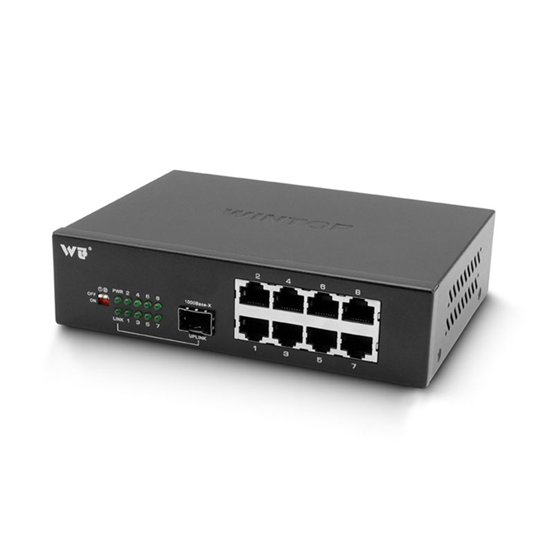
What Is a Gigabit Media Converter?
A gigabit media converter is a networking device that converts electrical Ethernet signals transmitted through copper cables into optical signals that can travel over fiber optic cables. It also performs the reverse process at the receiving end. This allows devices using RJ45 Ethernet ports to communicate seamlessly across fiber networks.
Gigabit media converters are commonly used in enterprise networks, industrial facilities, security surveillance systems, data centers, and campus environments where long-distance transmission is required.
How Does the Conversion Process Work?
The conversion process involves several key steps.
First, the converter receives a Gigabit Ethernet signal from a copper cable through its RJ45 port. The internal circuitry processes the electrical data and prepares it for optical transmission.
Next, an optical transceiver inside the media converter transforms the electrical signal into light pulses. These light signals are then transmitted through a fiber optic cable. Depending on the model, the fiber connection may use single mode or multimode fiber for different transmission distances.
At the opposite end of the network, another media converter receives the optical signal and converts it back into an electrical Ethernet signal. The connected network device can then process the data as if it had traveled through a standard Ethernet connection.
This conversion happens in real time with minimal latency, allowing transparent communication between copper and fiber segments.
Why Convert Copper to Fiber?
Many users choose gigabit media converters because fiber offers several advantages over copper cabling.
Fiber supports much longer transmission distances. While traditional Ethernet cables are generally limited to around 100 meters, fiber links can extend several kilometers depending on the fiber type and optical module.
Fiber is also resistant to electromagnetic interference, making it suitable for industrial environments and locations with significant electrical noise.
Additionally, fiber networks provide higher reliability and can support future network expansion more easily.
Choosing the Right Gigabit Media Converter
When selecting a media converter, users should consider factors such as transmission distance, fiber type, connector style, and port configuration. SFP-based models offer greater flexibility because different optical modules can be installed to meet specific network requirements.
Wintop offers a wide range of gigabit media converters, including SFP media converters, single fiber solutions, and multiport Gigabit Ethernet converters designed for various networking applications.
Conclusion
Gigabit media converters provide an efficient bridge between copper Ethernet and fiber optic networks. By converting electrical signals into optical signals and back again, they enable longer transmission distances, improved reliability, and seamless network integration.
At Wintop, we provide dependable networking products designed to support evolving communication infrastructures. Explore our gigabit media converter solutions and contact us today to find the right fiber connectivity option for your network.