
Layer 2 Network Switches in Industrial Ethernet Systems
In modern industrial Ethernet systems, a network switch layer 2 device plays a critical role in ensuring stable and efficient communication between connected equipment. At Wintop, we focus on designing industrial-grade Layer 2 switches that support reliable data forwarding, traffic segmentation, and network redundancy in demanding environments such as manufacturing, transportation, energy, and automation systems.
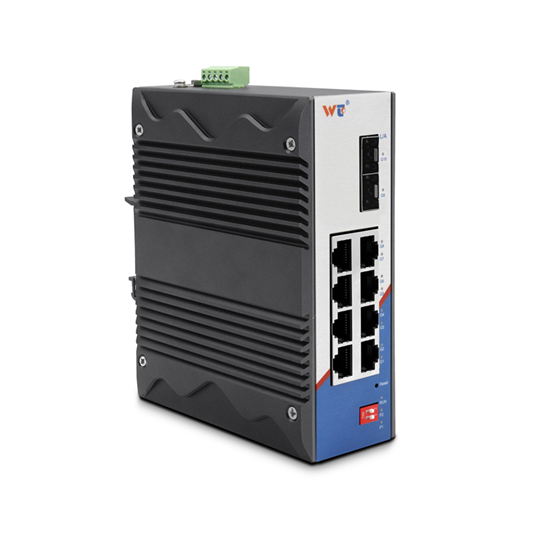
What a Layer 2 Network Switch Does in Industrial Networks
A Layer 2 switch operates at the data link layer of the OSI model, forwarding data based on MAC addresses. In industrial Ethernet systems, this means that devices such as PLCs, sensors, controllers, and cameras can communicate efficiently within the same network segment.
Unlike basic unmanaged switches, Layer 2 managed switches provide enhanced control features such as VLAN segmentation, port isolation, and loop protection. These functions help reduce broadcast storms and improve overall network stability, especially in complex industrial environments where uptime is essential.
Key Requirements in Industrial Applications
Industrial environments impose strict requirements on networking hardware. A network switch layer 2 used in such systems must deliver not only performance but also durability and reliability.
At Wintop, we design switches with features that address these needs, including wide operating temperature ranges, fanless metal housings, and strong electromagnetic interference resistance. For example, our industrial switches support operating conditions from -40°C to 85°C, making them suitable for harsh environments such as power stations and outdoor installations.
Redundant power inputs are also critical in industrial settings. They help ensure continuous operation even if one power source fails, reducing the risk of network downtime.
Core Functions That Improve Industrial Ethernet Performance
Layer 2 switches used in industrial Ethernet systems typically include several key networking functions that enhance performance and manageability.
First, VLAN support allows network segmentation, which improves security and reduces unnecessary traffic between devices. Second, STP and RSTP protocols help prevent network loops and maintain stable communication paths. Third, QoS (Quality of Service) ensures that time-sensitive data, such as control signals, is prioritized over less critical traffic.
At Wintop, we integrate these features into our Layer 2 managed switches to help users maintain predictable network behavior in real-time industrial applications.
Typical Industrial Use Scenarios
A network switch layer 2 is widely used in industrial automation, smart transportation systems, and energy infrastructure. In factory automation, it connects production line equipment for synchronized control. In transportation systems, it supports communication between monitoring devices and control centers. In energy networks, it enables stable data transmission between distributed monitoring units.
These applications require not only high-speed data transfer but also network resilience, which is why Layer 2 switches are often the preferred choice.
Conclusion
Layer 2 network switches are a foundational component of industrial Ethernet systems, providing efficient data forwarding, segmentation, and network stability. Their ability to support redundancy, VLANs, and real-time traffic control makes them essential for modern industrial environments.
At Wintop, we focus on delivering reliable industrial Layer 2 switches designed for long-term operation in harsh conditions, helping customers build stable and scalable industrial networks.
To learn more about our solutions, visit Wintop and explore how our industrial Ethernet switches can support your network infrastructure with consistent performance and dependable design.