
Lifecycle Management of Industrial Media Converter Systems
In industrial networking environments, the industrial media converter plays a critical role in bridging copper Ethernet and fiber optic networks. At Wintop, we work with deployment teams to ensure these devices remain stable across their full lifecycle, from initial installation to long-term maintenance and eventual replacement. Proper lifecycle management helps reduce downtime, improve signal reliability, and maintain predictable network performance in harsh environments.
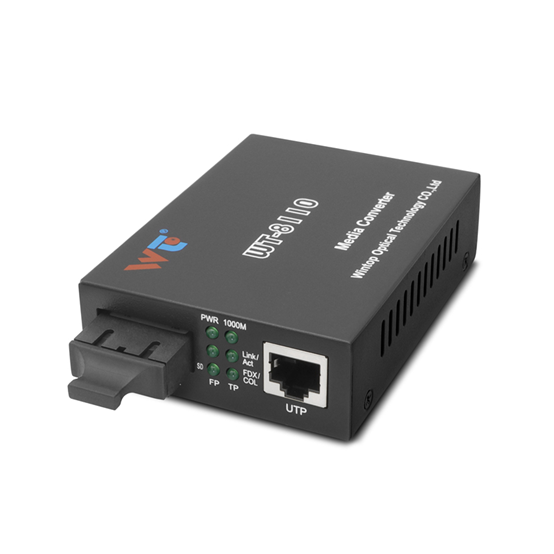
Planning and Deployment Phase
Lifecycle management begins before installation. When selecting an industrial media converter, we consider environmental conditions, transmission distance, interface type, and power stability requirements. Industrial settings often expose devices to vibration, EMI interference, and temperature fluctuations, so planning includes choosing hardened designs with stable power input and proper mounting options.
At Wintop, we emphasize matching converter specifications with network architecture. This includes verifying copper-to-fiber conversion needs, selecting appropriate fiber types, and ensuring compatibility with existing Ethernet switches and optical modules. Early-stage planning reduces future maintenance complexity and avoids mismatched configurations that can shorten device lifespan.
Operation and Performance Monitoring
Once deployed, industrial media converters operate continuously as part of mission-critical networks. We focus on maintaining stable performance through periodic monitoring of link status, optical signal quality, and port utilization.
A common concern in industrial environments is unnoticed degradation, such as increased packet loss or intermittent link failures. To address this, we recommend structured monitoring routines that track device temperature, power consistency, and fiber integrity. This allows teams to identify early warning signs before they escalate into system downtime.
Proper airflow management and secure power supply design also contribute to stable operation, especially in environments with high electrical noise or unstable voltage conditions.
Maintenance and Optimization Strategies
Maintenance in lifecycle management is not limited to reactive repair. We prioritize preventive actions such as cleaning fiber connectors, checking port alignment, and verifying link failover settings.
Firmware updates, where applicable, help ensure compatibility with evolving network protocols. However, many industrial media converters are designed for simplicity and long-term stability, so physical maintenance and environmental control remain more important than software changes.
We also evaluate redundancy strategies in critical systems. In high-availability environments, pairing converters or integrating redundant fiber paths helps minimize risk when a single device reaches performance limits or requires replacement.
End-of-Life and Replacement Planning
Every industrial media converter eventually reaches the end of its operational lifecycle. Signs include increased failure rates, limited compatibility with newer network equipment, or inability to meet updated bandwidth requirements.
At Wintop, we recommend planning replacement cycles proactively rather than waiting for failure. This includes maintaining inventory compatibility records and standardizing device models across facilities to simplify future upgrades.
Transition planning is also essential. When replacing devices, we ensure minimal disruption by staging replacements, testing new links in parallel, and verifying fiber continuity before full switchover.
Conclusion
Effective lifecycle management of industrial media converter systems ensures stable communication between copper and fiber networks throughout their operational lifespan. From careful deployment planning to structured maintenance and timely replacement, each stage contributes to network reliability and reduced downtime.
At Wintop, we focus on delivering industrial-grade media conversion solutions designed for long-term performance in demanding environments. Our solutions help businesses maintain stable fiber connectivity while simplifying lifecycle management from installation to replacement.