
What Does a 10G SFP Transceiver Do in Optical Networks?
In modern optical communication systems, compact and efficient hardware plays a key role in maintaining stable data transmission. A 10G SFP transceiver is one of the most widely used components in 10 Gigabit Ethernet environments. It supports high-speed connectivity between networking devices such as switches, routers, and servers. In this article, we explain what it does, how it functions in optical networks, and what users should consider when selecting it. We at Wintop focus on helping customers achieve reliable and efficient network performance through stable optical solutions.
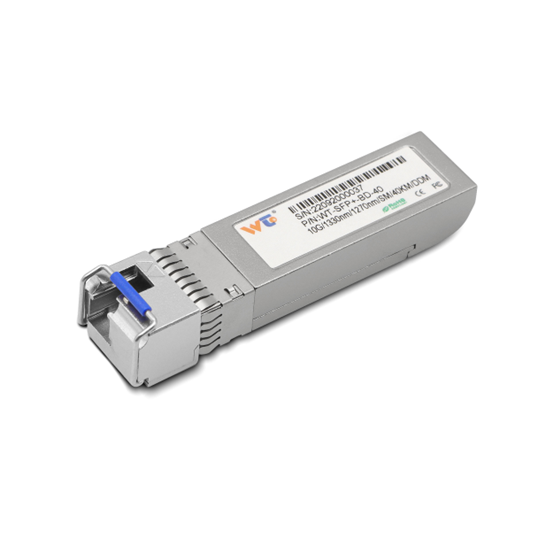
Role of a 10G SFP Transceiver in Networks
A 10G SFP transceiver functions as a bridge between electrical signals and optical signals. Inside networking equipment, data is processed in electrical form, but long-distance transmission over fiber requires light-based signals. The transceiver enables this conversion so that devices can communicate over fiber optic cables or compatible copper connections.
This makes it possible for a single switch port to support flexible transmission options without changing the main hardware design. As a result, network operators can upgrade performance and extend connectivity while maintaining existing infrastructure.
How It Works in Optical Communication
The operation of a 10G SFP transceiver is based on two main processes. First, it receives electrical signals from a device and converts them into optical signals using a laser component. These optical signals travel through fiber optic cables as light pulses. At the receiving end, another transceiver captures the light and converts it back into electrical signals for the destination device.
This process happens continuously and supports data rates up to 10 gigabits per second. Depending on the module design, transmission distance can vary from short-range connections within data centers to long-range links between buildings or network sites. The stability of this conversion process is essential for maintaining low latency and consistent network performance.
Common Types Used in Deployment
Different network environments require different types of 10G SFP transceivers. Short-range models are typically used within data centers where devices are close together. They work well with multimode fiber and are suitable for short-distance communication.
Long-range models are designed for single-mode fiber and can support transmission over several kilometers. These are often used for campus networks or connections between separate facilities. There are also extended range options for situations where even greater distance is required, such as metro-level connectivity.
Key Considerations for Selection
When choosing a 10G SFP transceiver, several practical factors need to be considered. Compatibility with existing networking equipment is essential to ensure proper operation. The type of fiber being used also determines which module is appropriate. Distance requirements must be evaluated carefully to avoid performance loss. Power efficiency and thermal stability are also important, especially in high-density installations where many modules operate simultaneously.
Conclusion
A 10G SFP transceiver plays a vital role in enabling high-speed and flexible optical network communication. It ensures smooth signal conversion, supports different transmission distances, and allows scalable network design without major infrastructure changes.
At Wintop, we provide stable and compatible 10G SFP transceiver solutions designed for practical deployment needs. If you are planning to upgrade your optical network, Wintop offers dependable products and technical support to help you build efficient and reliable connectivity systems.