
How to Design a Commercial Ethernet Switch Network for Your Business
A well-designed commercial Ethernet switch network is the foundation of efficient business operations. Whether supporting office communications, security systems, wireless access points, or cloud-based applications, the right network architecture helps ensure stable connectivity and smooth data transmission. Understanding the key factors involved in network design can help businesses build a scalable and reliable infrastructure.
Assess Your Business Network Requirements
Before selecting a commercial Ethernet switch, it is important to evaluate current and future network demands. Businesses should consider the number of connected devices, expected traffic volume, application requirements, and plans for future expansion.
For example, organizations using IP surveillance systems, VoIP phones, and wireless access points may benefit from Power over Ethernet capabilities. Companies with multiple departments may require VLAN support to improve traffic management and network security. Identifying these requirements early helps create a network that supports both present and future operations.
Select the Right Commercial Ethernet Switch
The choice of switch plays a critical role in network performance. Businesses typically choose between unmanaged, smart, and managed switches depending on their operational needs. Managed switches offer advanced features such as VLAN configuration, Quality of Service, traffic monitoring, and network redundancy, making them suitable for growing commercial environments.
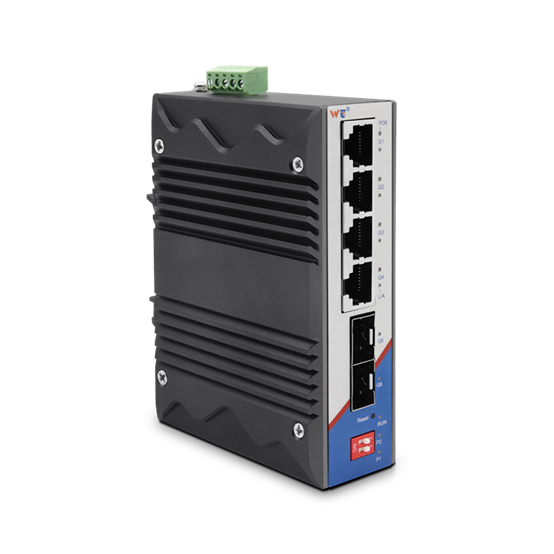
Wintop provides a range of Ethernet switch solutions, including unmanaged switches, smart switches, Layer 2 managed switches, and PoE switches designed for different business scenarios. These options allow organizations to select equipment that aligns with their operational requirements and network complexity.
Plan Network Topology and Scalability
A structured network topology simplifies management and improves performance. Many businesses adopt a hierarchical design that includes core, distribution, and access layers. This approach helps reduce bottlenecks and makes future expansion easier.
Scalability should also be considered during the design phase. Choosing switches with sufficient port density and uplink capacity can accommodate additional devices without requiring a complete network redesign. Fiber uplinks and Gigabit Ethernet ports are often used to support growing bandwidth demands.
Prioritize Reliability and Security
Network downtime can disrupt business operations and impact productivity. Features such as STP, RSTP, VLAN segmentation, QoS, and link redundancy help improve network stability and traffic efficiency. Modern managed switches also provide monitoring and management capabilities that assist administrators in identifying and resolving issues quickly.
Security should be integrated into the network design from the beginning. VLAN isolation, access control policies, and secure management interfaces can help protect sensitive business data and reduce unauthorized access risks.
Conclusion
Designing an effective commercial Ethernet switch network requires careful planning, appropriate equipment selection, and a focus on scalability, reliability, and security. By assessing business requirements and implementing a structured network architecture, organizations can create a network that supports long-term growth and operational efficiency.
At Wintop, we provide commercial Ethernet switch solutions for enterprise networking, industrial communication, surveillance systems, and smart infrastructure projects. Our product portfolio includes managed switches, PoE switches, and industrial networking solutions designed to meet diverse deployment needs. Explore Wintop today and find the right networking solution for your business.